Every year the same thing happens. You scroll through Pinterest, save thirty gorgeous rangoli photos, and then stand at your doorstep with a bowl of colour, wondering where to even begin.
If that’s you, relax. A good rangoli doesn’t need to be huge or perfect. Some of the prettiest ones I’ve seen outside homes are small, simple and a little imperfect. This guide gives you 12 easy Diwali 2026 rangoli designs with actual steps, so you can start without guessing.
Diwali 2026 dates (so you can plan ahead)
Diwali falls on Sunday, 8 November 2026. Here’s how the five days line up:
- Dhanteras: Friday, 6 November
- Choti Diwali (Naraka Chaturdashi): Saturday, 7 November
- Diwali / Lakshmi Puja: Sunday, 8 November
- Govardhan Puja: Monday, 9 November
- Bhai Dooj: Tuesday, 10 November
Most families make their main rangoli on Dhanteras or on Diwali day itself, so give yourself a practice run a few days earlier.
What you need before you start
You don’t need fancy supplies. A basic kit is enough:
- Rangoli colours or rice flour (white rangoli powder works for outlines)
- Fresh flower petals (marigold, rose, any loose petals)
- A few diyas
- A small spoon or an empty plastic bottle with a hole in the cap, which helps you draw clean lines
- Chalk for sketching the outline first
- A broom and a damp cloth to clean the floor
Beginner tip: Always sweep and wipe the floor first. Colour sticks and shows up much better on a clean, slightly dry surface.
12 easy rangoli designs for Diwali 2026
1. Simple diya rangoli
Difficulty: Very easy | Time: 10 minutes
This is the best place to start. Draw a small diya shape with chalk, fill the bowl in orange or red, and add a yellow flame on top. Then place a real diya in the centre. Draw a few small dots around it as sparkle.
2. Small lotus rangoli
Difficulty: Easy | Time: 15-20 minutes
Start with a small circle. Draw a row of petals around it, then a second row of petals in between the first ones. Colour the inner petals light pink and the outer ones a deeper pink. White outlines make the petals pop. The lotus is closely tied to Goddess Lakshmi, which is why it’s such a popular Diwali choice.
3. Dot rangoli diamond
Difficulty: Easy | Time: 15 minutes
Make dots in a diamond shape: one dot, then three, then five, then three, then one. Join the dots with curved lines to form petals or leaves, then colour them in. If you can count, you can do this one.
4. Marigold petal rangoli (no colour needed)
Difficulty: Very easy | Time: 10-15 minutes
This is perfect if you don’t want to deal with colour powder. Make a circle of orange marigold petals, add an inner ring of yellow, and put a diya in the middle. Add a few green leaves around the edge for contrast. It also smells lovely.
5. Corner rangoli
Difficulty: Easy | Time: 10 minutes
Short on space? Draw a quarter-circle pattern in the corner of your doorway or beside the puja room entrance. Add a curve of petals, a few dots and a small diya. It looks neat and takes almost no floor space.
6. Om or Shubh Labh rangoli
Difficulty: Easy | Time: 10-15 minutes
Write “Om” or “Shubh Labh” in the centre with white powder. Then fill the background with a bright colour like orange or red. Keep your handwriting simple and bold, since neat thick letters look better than fancy thin ones.
7. Mini peacock rangoli
Difficulty: Medium | Time: 25 minutes
Draw a small teardrop for the body and a simple curved neck. Then draw the tail as a half-circle fan of feather shapes, filled with blue, green and gold. You can keep the peacock small and still have it look elegant.
8. Circular mandala-style rangoli
Difficulty: Medium | Time: 20-25 minutes
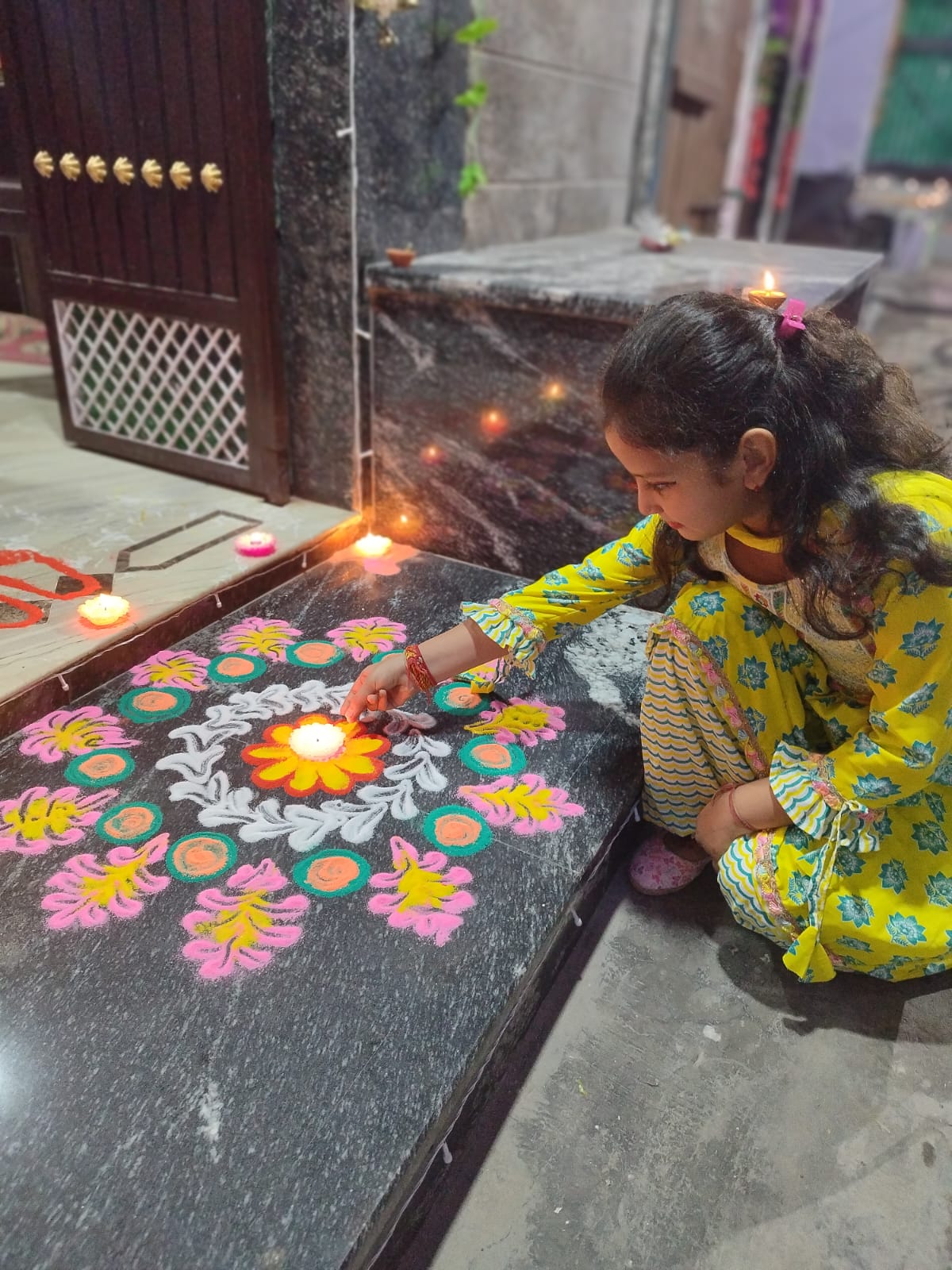
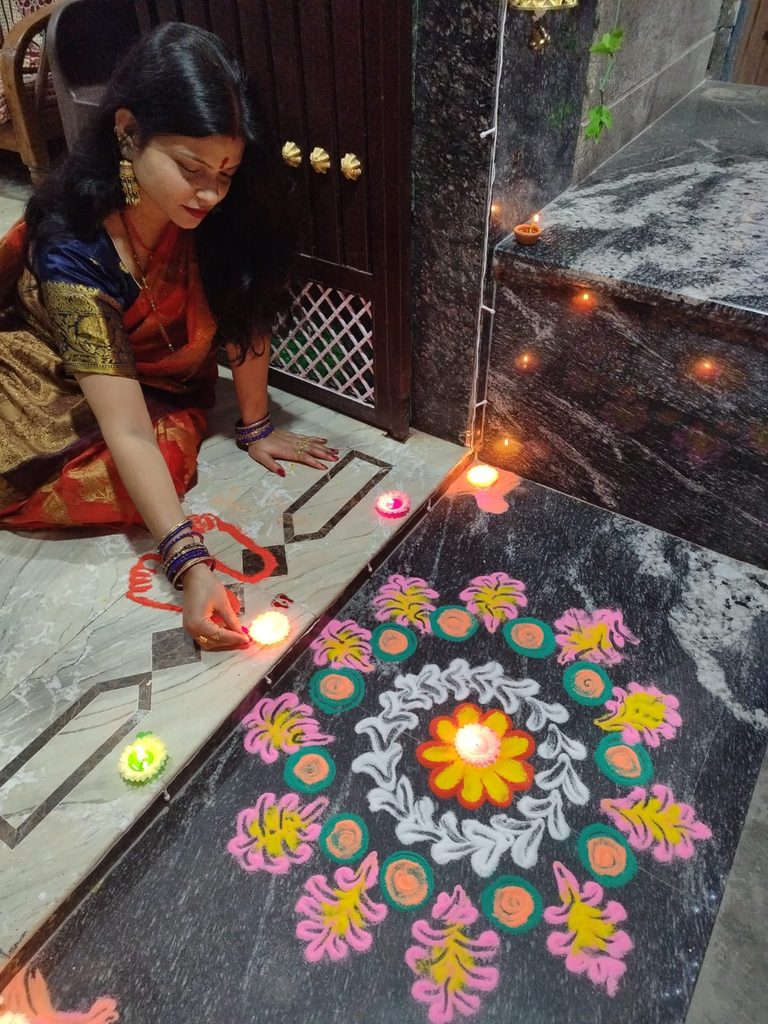
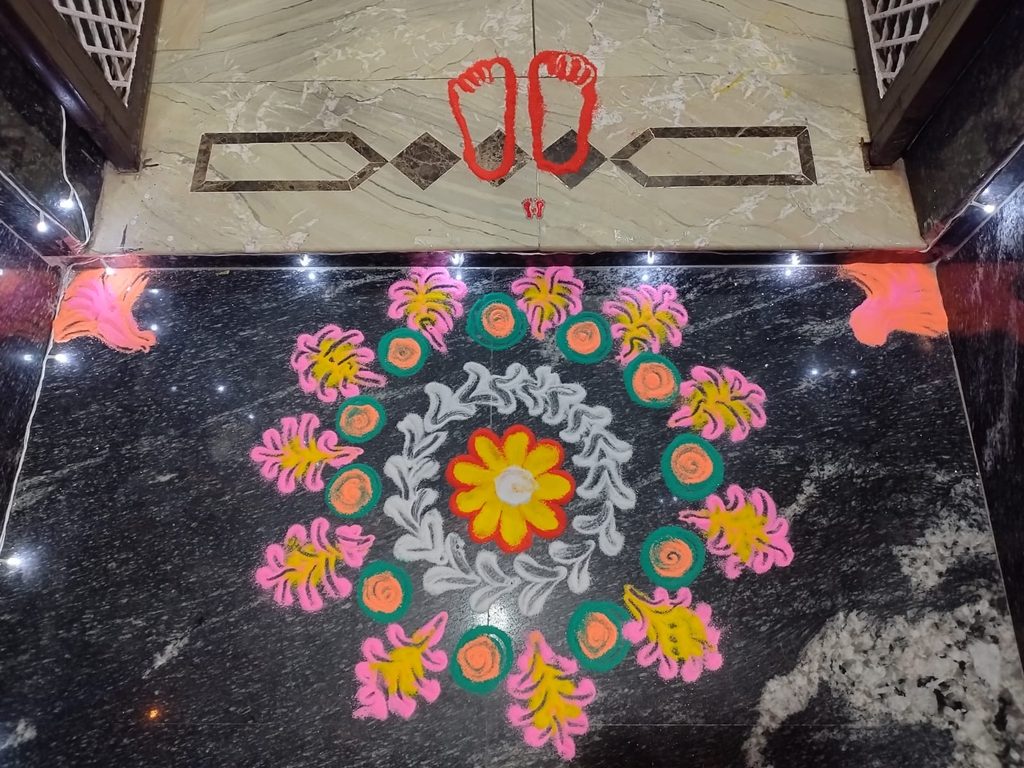
Draw one small circle, then repeat the same shape outward in rings: dots, petals, dots again. Keep each ring simple, and the repetition does the work for you. Stick to two or three colours so it doesn’t look crowded.
9. Lakshmi charan (footprints)
Difficulty: Easy | Time: 10 minutes
Draw a pair of small footprints in white rice flour, pointing into the house. Many families make these at the entrance to welcome Goddess Lakshmi. Decorate the edges with dots or tiny flowers, and add a few red dots for kumkum.
10. Rangoli with stencils
Difficulty: Very easy | Time: 5-10 minutes
Short on time, or nervous about freehand? Stencils are completely fine. Place the stencil, pour colour, lift it slowly, and add petals or diyas on top to make it feel personal.
11. Floating flower and diya rangoli
Difficulty: Very easy | Time: 10 minutes
Fill a wide brass urli or shallow bowl with water. Float flower petals on top and add two or three tea-light candles. It works well on balconies and tables, where you can’t make a floor rangoli.
12. Eco-friendly rangoli with rice, dal and spices
Difficulty: Easy | Time: 20 minutes
Make your patterns using coloured rice, turmeric (yellow), red chilli powder (red) and pulses like moong or masoor. You get natural colours, no chemicals, and a nice texture. Keep it away from pets that might nibble it.
Quick colour tips that actually help
- Orange, yellow and red feel warm and festive, and are the safest choice for Diwali.
- Use white for outlines. It makes every colour look sharper.
- Add one contrast colour such as blue, green or purple so the design doesn’t look flat.
- Keep your design to three or four colours if you’re a beginner.
Where to place your rangoli
- At the main entrance, which is the most common and traditional spot
- Next to the puja room or mandir
- Near the tulsi plant or in the courtyard
- On balconies or windowsills, using the floating rangoli ideas above
Common beginner mistakes to avoid
- Making it too big. Start small. A neat 2-foot rangoli beats a messy 5-foot one.
- Skipping the chalk outline. A light sketch saves you from mistakes.
- Using too many colours. It looks busy and harder to fix.
- Making it too early. Do your final rangoli the same day, since wind, feet and pets will mess it up quickly.
- Forgetting to practise. Try one design on paper or a spare tile a few days before.
A simple 5-day plan
- Dhanteras: Lakshmi charan or a small diya rangoli at the entrance
- Choti Diwali: A quick marigold petal rangoli
- Diwali day: Your best design, such as the lotus or the mandala style
- Govardhan Puja: A simple dot rangoli
- Bhai Dooj: A small floating flower and diya rangoli for the thali table
Don’t forget your festive look
You’ll be spending a lot of time on the floor, then in front of guests, then in photos. So plan something comfortable but pretty. If you’re already stuck on what to wear this season, these Karwa Chauth outfit ideas for first-timers are easy to repeat or restyle for Diwali too.
Frequently asked questions
Which rangoli is best for beginners?
Simple diya, dot diamond and marigold petal rangoli are the easiest. They need very little skill and look good right away.
How do I make a small rangoli for Diwali?
Pick one shape, such as a lotus or diya, keep the size to about 1-2 feet, and use three colours at most. Sketch it with chalk first, fill the colours, and finish with a diya.
Can I make rangoli without colour powder?
Yes. Flower petals, rice flour, turmeric, coloured rice and pulses all work well.
How do I stop my rangoli from getting spoiled?
Make it on a clean, dry floor and keep it away from heavy foot traffic. Finishing it closer to the evening helps too.
Which day should I make the rangoli?
Many people make one on Dhanteras and again on Diwali day, but you can make it on all five days if you like.
Final thoughts
Rangoli is meant to bring a little joy to the doorstep, not to win a competition. Pick one design from this list, practise once, and let your hands do the rest. Even a slightly wobbly diya, made with care, feels warmer than a perfect printed sticker.
For more festive guides, recipes, trends and stories, keep exploring Plusstories. Happy Diwali, and enjoy the colours!