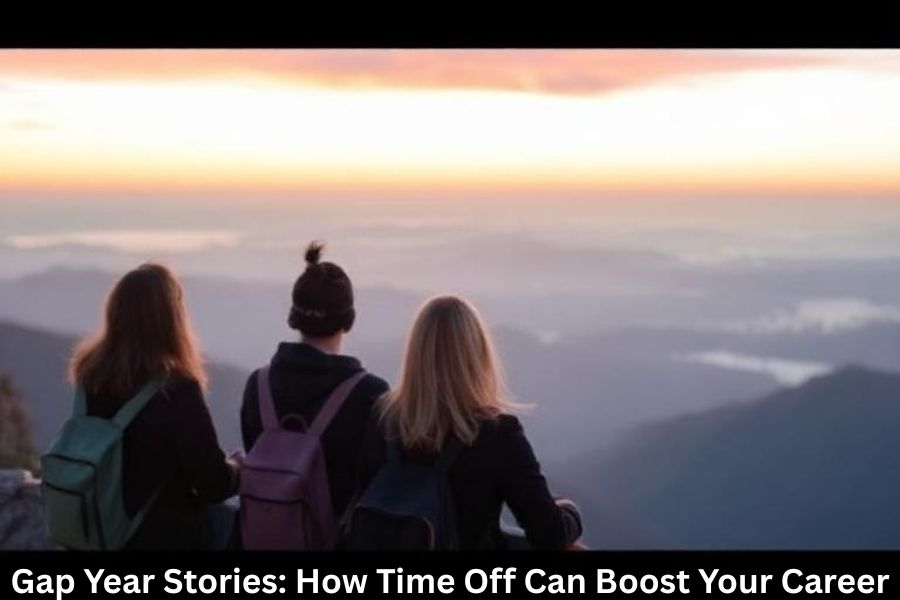
Let’s start with a question that makes many students and professionals slightly nervous:
👉 “Is taking a gap year a bad idea?”
For years, the answer from society sounded like a loud YES.
“Don’t waste time.”
“You’ll fall behind.”
“Employers won’t like it.”
But here’s the twist…
Some of the most successful, confident, and creatively fulfilled people took time off — and came back stronger.
Yes, stronger.
Not lazy. Not lost. Not behind.
So let’s flip the script and talk about something refreshing:
How a gap year can actually boost your career.
The Stigma Around Gap Years
Somehow, we were taught that life is a race.
School → College → Job → Promotion → Repeat.
No pauses. No detours. No breathing space.
Take a break and people whisper:
👉 “What went wrong?”
👉 “Couldn’t handle pressure?”
But think about it…
Would you drive a car non-stop for years without servicing it?
Exactly.
Humans need resets too.
A New Perspective on Time Off
Today’s world looks very different.
Careers are longer.
Industries change faster.
Skills become outdated quickly.
A strategic pause isn’t weakness — it’s recalibration.
Like updating your internal software.
What is a Gap Year?
Definition and Modern Meaning
A gap year is a planned break from formal education or work.
Not an escape.
Not doing “nothing.”
It’s intentional time used for:
✔ Travel
✔ Learning
✔ Internships
✔ Volunteering
✔ Personal projects
✔ Mental recovery
Gap Year vs Career Break
They’re similar but usually differ by life stage.
- Gap Year → Often between school/college or early career
- Career Break → Mid-career pause
Both can be powerful when used wisely.
Why People Take Gap Years
Burnout and Mental Reset
Burnout is real.
Exams, deadlines, expectations — constant pressure drains energy.
A gap year can help you:
✔ Recharge mentally
✔ Reduce anxiety
✔ Rebuild motivation
Because a tired brain makes poor decisions.
Exploring Passions
Ever felt unsure about your path?
Medicine or design?
Corporate job or entrepreneurship?
A gap year gives you room to experiment.
Without permanent consequences.
Travel and Cultural Exposure
Travel isn’t just Instagram photos.
It teaches:
✔ Adaptability
✔ Communication
✔ Problem-solving
✔ Cultural intelligence
You learn more from navigating a foreign city than from some textbooks.
Skill Development
Many people use gap years to learn:
✔ Coding
✔ Design
✔ Languages
✔ Marketing
✔ Finance
✔ Writing
Practical skills. Career fuel.
Real Gap Year Stories
Let’s move from theory to reality.
The Traveler Who Became a Global Consultant
Riya postponed her MBA and spent a year backpacking across Southeast Asia.
Family worried. Friends questioned.
But during her travels she:
✔ Built confidence
✔ Improved communication
✔ Learned cross-cultural negotiation
Today? She works as a global business consultant.
Her edge? Cultural adaptability.
The Graduate Who Discovered a Startup Idea
Arjun didn’t rush into placements.
Instead, he spent a year freelancing and exploring tech communities.
He identified a market gap → Built a prototype → Launched a startup.
That “break” became his launchpad.
The Professional Who Switched Careers
Neha worked in finance but felt deeply unfulfilled.
She took a gap year to explore UX design.
Courses. Projects. Portfolio building.
Now she designs digital experiences — and loves Mondays.
The Volunteer Who Built Leadership Skills
Kabir volunteered with an NGO teaching underprivileged children.
He gained:
✔ Leadership
✔ Patience
✔ Emotional intelligence
In interviews, recruiters saw maturity beyond his age.
How a Gap Year Can Boost Your Career
Building Transferable Skills
Gap years develop skills employers crave:
✔ Communication
✔ Leadership
✔ Problem-solving
✔ Independence
✔ Resilience
These aren’t easily taught in classrooms.
They’re lived.
Expanding Professional Networks
Internships, volunteering, workshops, travel — you meet people outside your usual bubble.
Connections open doors.
Sometimes unexpectedly.
Gaining Clarity and Direction
Many people rush into careers they later regret.
A gap year helps you ask:
👉 “What do I actually want?”
👉 “What kind of life suits me?”
Clarity saves years of dissatisfaction.
Enhancing Creativity and Problem-Solving
New environments stimulate fresh thinking.
Different cultures → Different perspectives → Better ideas.
Innovation loves exposure.
Skills You Can Gain During a Gap Year
Communication
Interacting with strangers, teams, clients — you sharpen your voice.
Adaptability
Plans change. Flights cancel. Projects fail.
You learn flexibility — a superpower in modern careers.
Leadership
Managing events, teams, initiatives — leadership emerges naturally.
Time Management
Without rigid schedules, self-discipline becomes essential.
Addressing Employer Concerns
Yes, recruiters may ask:
👉 “Why the gap?”
Relax. This is your opportunity.
How to Explain a Gap Year in Interviews
Frame it with confidence:
✔ “I used the year to develop…”
✔ “I focused on gaining experience in…”
✔ “It helped me build skills like…”
Never sound apologetic.
Own your story.
Turning Experiences into Assets
Travel → Cultural intelligence
Freelancing → Business skills
Volunteering → Leadership
Courses → Technical growth
Everything has value if articulated well.
Planning a Productive Gap Year
A gap year without direction becomes… well… just a long vacation.
Setting Goals
Ask:
✔ What do I want to learn?
✔ What experiences do I seek?
✔ What skills should I build?
Budgeting Smartly
Financial stress ruins the experience.
Plan savings, income sources, expenses.
Mixing Rest with Growth
Balance is key.
Rest → Recharge
Growth → Progress
Too much of either = Problematic.
Common Gap Year Mistakes to Avoid
❌ No clear plan
❌ Overspending
❌ Doing nothing meaningful
❌ Losing professional touch
❌ Failing to document experiences
Keep records. Build portfolios. Stay connected.
Is a Gap Year Right for You?
Not everyone needs one.
But it may be right if:
✔ You feel burnt out
✔ You lack career clarity
✔ You want to explore interests
✔ You seek skill-building opportunities
Key Questions to Ask Yourself
👉 Am I running away or planning growth?
👉 Do I have financial stability?
👉 Do I know what I want from the break?
Honest answers matter.
Conclusion
A gap year isn’t a pause in life.
It’s a strategic pit stop.
When used wisely, it can:
✔ Improve mental health
✔ Build valuable skills
✔ Expand perspectives
✔ Clarify career direction
✔ Increase confidence
Because success isn’t about moving fast.
It’s about moving right.
FAQs
1. Do employers view gap years negatively?
Not if the gap is purposeful. Clearly explaining what you learned or achieved can even make you stand out.
2. Is a gap year only for students?
No. Professionals at any stage can benefit from a structured career break.
3. How long should a gap year be?
Typically 6–12 months, depending on goals, finances, and plans.
4. Can a gap year improve career clarity?
Absolutely. Many people discover their true interests and direction during time off.
5. What should I avoid during a gap year?
Avoid drifting without purpose, overspending, and disconnecting completely from professional development.