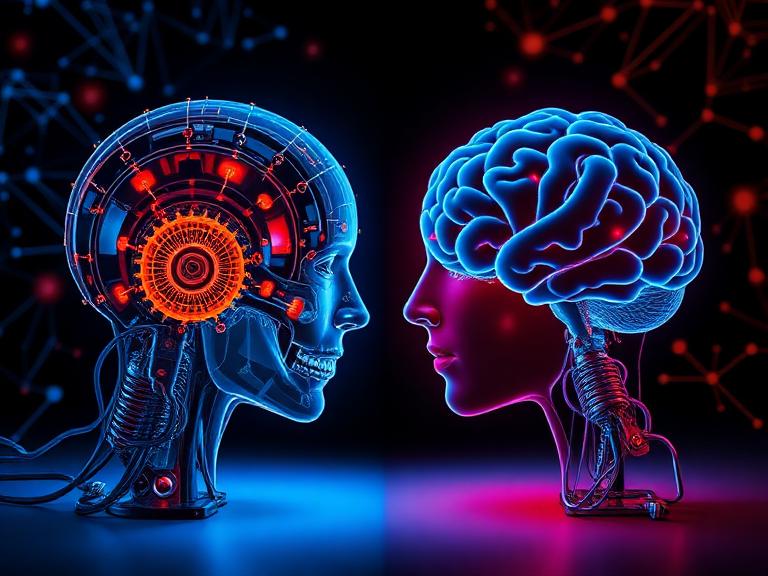
Artificial intelligence has quickly become part of everyday life. From helping students with homework to answering questions, generating stories, explaining difficult concepts, and even creating images, AI can feel incredibly intelligent. For children, it can make learning more interactive and exciting. However, there is something important that every young AI user—and every parent—should understand: AI can sometimes give information that sounds true but is completely wrong.
These incorrect or made-up responses are commonly called AI hallucinations.
For parents and educators exploring AI for kids, understanding hallucinations is essential. AI can be an excellent learning assistant, but children need to know that an AI-generated answer should not automatically be treated as a fact. Learning how to question, verify, and think critically about AI responses can help children become smarter and more responsible technology users.
What Are AI Hallucinations?
An AI hallucination occurs when an artificial intelligence system generates information that is inaccurate, misleading, or completely fabricated. The strange thing is that the response may sound confident, detailed, and perfectly reasonable.
For example, imagine a child asks an AI chatbot:
“Who invented the world’s first flying bicycle?”
If there is no real historical record of such an invention, the AI might still provide the name of an imaginary inventor, a year, and even a detailed explanation of how the bicycle supposedly worked.
The answer may sound convincing, but none of it may be true.
That is an AI hallucination.
AI hallucinations can involve incorrect facts, invented people, fake statistics, nonexistent books, inaccurate quotations, false scientific claims, or even made-up references and websites.
Why Does AI Make Things Up?
To understand why hallucinations happen, it helps to understand that AI does not think exactly like a human.
Generative AI models are trained using large amounts of information and learn patterns in language. When a person asks a question, the system generates a response based on patterns it has learned.
It does not necessarily stop and independently verify every statement before giving an answer.
In simple terms, AI is extremely good at predicting and generating language, but generating a confident sentence is not the same as knowing whether that sentence is true.
This difference is especially important when children use AI for learning.
AI May Not Have Enough Information
Sometimes AI simply does not have enough reliable information about a particular topic.
This can happen when a subject is very obscure, new, highly specialized, or poorly represented in the information available to the system.
Instead of saying, “I don’t know,” an AI system may attempt to provide an answer based on related information.
That can result in a believable but incorrect response.
AI Can Misunderstand a Question
The way a question is written can also affect the quality of an AI response.
Consider a child asking:
“Tell me about Mercury.”
Does the child mean the planet, the chemical element, or the Roman god?
A human teacher might ask a follow-up question. An AI may choose one interpretation and continue.
This is why children learning AI for kids should also learn how to write clear and specific prompts.
Training Data Can Contain Problems
AI models learn from huge collections of information. That information may contain outdated facts, mistakes, contradictions, incomplete explanations, or unreliable sources.
If an AI encounters conflicting information, it may generate a response that combines different pieces incorrectly.
This does not mean AI is useless. It simply means that AI output should sometimes be treated as a starting point rather than the final answer.
What Do AI Hallucinations Look Like?
AI hallucinations can appear in many forms.
For example, an AI might:
- Invent a historical event that never happened.
- Give the wrong date for a real event.
- Create a fictional scientist and present them as real.
- Provide a fake quotation from a famous person.
- Recommend a book that does not exist.
- Invent statistics to support an argument.
- Give an incorrect mathematical explanation.
- Provide a website or research paper that cannot be found.
- Mix facts about two different people together.
- Explain a fictional story as though it were historical.
The most challenging part is that these answers can look professional.
There may be complete sentences, headings, dates, names, and detailed explanations. A child who is unfamiliar with the subject may have no immediate way of knowing that the answer is wrong.
Why Are AI Hallucinations Important for Kids?
Children are naturally curious. They ask questions about science, history, animals, technology, space, and almost everything around them.
AI can make it easier for them to explore these interests. However, children are still developing their ability to evaluate information.
Imagine a student asks AI to explain an important historical event. The AI provides three incorrect facts. The student trusts the answer and includes those facts in a school assignment.
The problem is not simply that the AI made a mistake. The bigger issue is that the child did not know how to recognize or verify the mistake.
This is why responsible AI for kids education should include digital literacy and critical thinking—not just how to use AI tools.
AI Sounds Confident, But Confidence Does Not Mean Accuracy
One of the biggest misconceptions about AI is that a confident answer must be a correct answer.
That is not true.
AI can write:
“The famous scientist discovered this in 1897.”
The sentence may sound certain, but the date could be completely incorrect.
Children should learn an important rule:
A confident AI response is not proof that the information is true.
The same lesson applies to information found on social media, websites, videos, and even conversations with other people. Good digital literacy means checking information instead of automatically believing it.
How Can Kids Spot an AI Hallucination?
Children do not need to become AI experts to identify questionable information. They can develop a few simple habits.
1. Ask, “Does This Sound Right?”
If an answer seems strange, surprising, or too perfect, pause before accepting it.
For example, if AI claims that a person lived for 250 years, that should immediately encourage the child to investigate further.
2. Check Important Facts
Children should verify important information through reliable sources such as textbooks, educational websites, libraries, or information recommended by teachers.
For schoolwork, it is particularly important not to rely on a single AI response.
3. Look for Multiple Sources
One of the easiest ways to check information is to compare it with other trustworthy sources.
If several reliable sources agree while an AI response says something completely different, the AI answer deserves closer examination.
4. Ask a Parent or Teacher
Children should feel comfortable saying, “I’m not sure this answer is correct.”
A parent or teacher can help them investigate the information instead of simply telling them whether it is right or wrong.
5. Be Careful With Citations
Sometimes AI provides sources, references, or links that appear legitimate but may not actually exist.
Children should learn to open and verify important sources rather than assuming a citation is genuine simply because AI included it.
How Parents Can Teach Children About AI Hallucinations
Parents do not need to give children a complicated technical lesson about machine learning.
Instead, they can turn AI mistakes into learning opportunities.
For example, a parent could ask a child to give AI a simple factual question and then check the answer together.
If the AI makes a mistake, the parent can explain:
“AI can be helpful, but it doesn’t always know whether something is true. That’s why we check important information.”
This approach teaches children to use AI without being afraid of it.
Parents can also encourage children to treat AI like a helpful assistant rather than an all-knowing teacher.
AI Should Support Learning, Not Replace Thinking
One of the most valuable lessons children can learn from AI for kids education is that AI should support their thinking—not do all the thinking for them.
For example, instead of asking AI to complete an entire school project, a child could ask it to:
- Explain a difficult concept in simple language.
- Suggest ideas for a science project.
- Help brainstorm a story.
- Create practice questions.
- Explain why an answer is incorrect.
- Give examples of a mathematical concept.
- Help organize ideas for an assignment.
The child can then evaluate the information and create their own final work.
This approach encourages curiosity and understanding rather than simple copy-and-paste learning.
How KidzoAI Can Help Children Explore AI
As AI becomes more common in education and everyday life, parents are increasingly interested in age-appropriate ways to introduce children to this technology.
KidzoAI is a platform parents can explore when looking for resources related to AI learning for children.
The goal should not simply be to teach children how to use AI tools. It should also be to help them understand what AI can do, where it can make mistakes, and how to use it responsibly.
Can AI Hallucinations Be Completely Prevented?
Unfortunately, there is no simple way to guarantee that an AI system will never hallucinate.
AI developers continue to improve models, training methods, information retrieval, safety systems, and fact-checking techniques. These improvements can reduce errors, but users should still remain cautious.
This is particularly important when AI is used for subjects where accuracy matters greatly.
For children, that means AI can be a useful starting point for learning, but important information should be verified with trustworthy sources and adults when necessary.
Teaching Children to Ask Better Questions
Better questions can often lead to better AI responses.
Instead of asking:
“Tell me about space.”
A child could ask:
“Explain why astronauts experience weightlessness in space in a way that a 10-year-old can understand.”
Specific questions give AI clearer instructions.
Children can also ask follow-up questions such as:
“Are you sure about this?”
“What source supports this information?”
“Can you explain which part of your answer might be uncertain?”
These questions do not guarantee a perfect answer, but they encourage children to think more critically about what they receive.
The Bigger Lesson: Don’t Believe Everything You Read
AI hallucinations teach children a lesson that goes beyond artificial intelligence.
The internet contains enormous amounts of information, but not all of it is accurate.
A social media post can be misleading. A website can contain outdated information. A video can present an opinion as a fact. And an AI chatbot can confidently generate something that never happened.
Children therefore need a broader skill: information literacy.
They should learn to ask:
Who created this information?
Where did it come from?
Can I verify it?
Does another trustworthy source agree?
These questions can help children navigate the digital world more safely.
Final Thoughts
AI hallucinations can be confusing, especially because AI-generated mistakes often sound convincing. But understanding why AI makes things up can help children become more careful and confident users of technology.
For parents introducing AI for kids, the goal should not be to teach children to blindly trust AI—or to avoid it completely. The better approach is to teach them how to use AI thoughtfully.
AI can explain, brainstorm, teach, and inspire. But children should remain curious, ask questions, verify important information, and use their own judgment.
The most valuable AI skill may not be knowing how to get an answer quickly. It may be knowing when to question the answer.
Frequently Asked Questions
What is an AI hallucination?
An AI hallucination is an incorrect, fabricated, or misleading response generated by an AI system that may appear factual or convincing.
Why does AI hallucinate?
AI can hallucinate because it generates responses from patterns learned during training. If information is missing, unclear, conflicting, or misunderstood, the system may produce an inaccurate answer.
Are AI hallucinations dangerous for children?
They can be problematic when children accept incorrect information without checking it. Teaching children to verify important facts can significantly reduce this risk.
How can children check AI-generated information?
Children can compare AI responses with trusted books, educational websites, school resources, and other reliable sources. They can also ask parents or teachers for help when they are unsure.
Is AI useful for children’s education?
Yes. When used appropriately, AI can help children understand concepts, brainstorm ideas, practice skills, and explore new subjects. However, it should complement learning rather than replace critical thinking or guidance from parents and teachers.